US
US
To Cushion or Not Too Cushioned: A Sock Cushioning Debate

We like to think of ourselves as one big sock-wearing family. But like any family, we have our disagreements. Right now, there are a couple internal beefs here at Darn Tough. First, is pineapple on pizza acceptable? And most pressing: are you #TeamCushion or #TeamNoCushion?
In this post we’ll break down what sock cushion is, why it’s helpful, the types of cushioning options we offer, and give some examples of different activities where you’d maybe want to go with Cushion or No Cushion. Meanwhile, the pizza question will require further testing.
Sock Cushioning 101: Why it Matters
Before taking sides, it helps to level set what sock cushioning actually does. Cushioning is not just about softness. It is about how socks help manage impact, friction, and heat over time.
Sock cushioning can absorb shock, reduce friction, and help protect high-use areas like the forefoot, heel, and Achilles, especially during high-impact activities. When socks provide the right amount of cushion, they support comfort and performance while working with your footwear, not against it.
Cushion We Be Pushin'
Socks with cushion provide added protection for high impact areas, a bit of shock absorption, and extra warmth and comfort. The cushion comes from knit terry loops, which are created by pulling the thread and making a loop between every stitch.
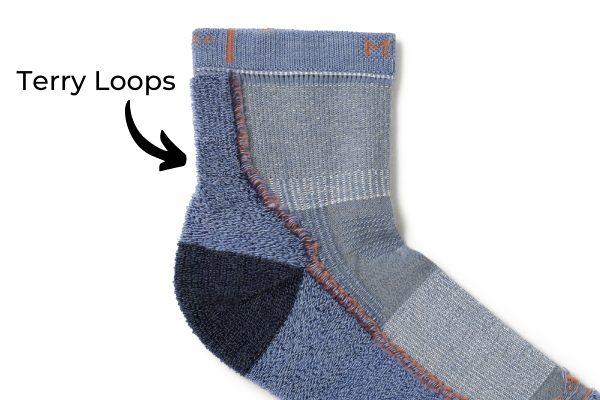
At Darn Tough, we offer three different cushioning levels: No Cushion, Cushion, and Full Cushion.

- No Cushion socks are thinner and have exactly that—no cushion.
- Cushion socks have padding along the bottom of the foot and in high wear areas, like the heels and toes.
- Full Cushion socks have cushioning throughout the entire sock, including the ankle, over the top of the foot, and up into the leg.
Looking for more information about our sock cushioning? Check out Darn Tough's Complete-ish Guide to Sock Cushioning.
Cushion Levels & Sock Weights: A Guide to Comfort & Performance
Cushion levels help determine the amount of padding you feel underfoot and around your sock. Sock weight refers to the thickness of the yarn itself, and our sock weight options fall under the following classifications: Ultra-Lightweight, Lightweight, Midweight, and Heavyweight. Together, cushion and weight shape how socks feel and function for different activities.
How Weight Influences Cushion Feel
- Ultra-Lightweight: These are the lightest socks we knit. They pair especially well with light cushion profiles when you want a low-bulk feel that still provides padding where you need it.
- Lightweight: A step up in yarn thickness, lightweight socks strike a balance between durability and packability. They serve as a great foundation for both a modest cushion and a minimal profile when paired with lighter footwear.
- Midweight: This is the everyday workhorse sock. Combined with standard or maximum cushioning, midweight socks offer to absorb shock, help manage moisture, and support feet across more demanding hikes and longer wear.
- Heavyweight: Built for warmth and long days in rugged conditions, heavyweight socks with maximum cushion deliver comfort and durability where you need it most. They are excellent for cold weather and extended trail use.
Matching Cushion with Sock Weight

Not every activity requires the same approach to cushioning. Think of cushion and weight as completmentary tools you can mix and match:
- Light cushion + Ultra-Lightweight: A good combination for runners and movement-first activities that demand agility with just enough protection.
- Standard cushion + Midweight: A balanced choice for most hikers and daily trails, especially when you want comfort without too much bulk.
- Maximum cushion + Midweight or Heavyweight: A go-to for long days on hard surfaces, multi-day treks, or when socks help absorb shock and reduce fatigue.
No matter the combo, cushioning is still built from knit terry loops that give padding and support in the zones your feet encounter impact most
Comfort and Function Together
Weight and cushion work together, not separately. A sock with maximum cushion that is also heavyweight will provide extra comfort and warmth, while a lighter sock with just a bit of cushion will keep your feet agile and cool. This lets you enhance comfort and performance without over-packing for the activity you're into.
Reasons to Be #TeamCushion

Boasting more softness and comfort, Cushion and Full Cushion socks are thicker and wick moisture, helping to prevent blisters. They also give a plush buffer to hiking boots, work boots, and snowboard boots. You can find Cushion and Full Cushion socks in most of our line, including Hiking, Running, Lifestyle, Work, Ski and Snowboard, and Hunting socks.
Here’s a list of activities where you may want Cushion and Full Cushion socks:
- Long days in work boots
- Going on a day hike
- Backpacking the Long Trail
- As an indoor replacement to slippers
- When you have to wear uncomfortable shoes
- For a little more rebound on a run
- Shredding pow (or ice) on a snowboard
Reasons to Be #TeamNoCushion

No Cushion socks give you a standard feel for everyday activities and the lowest profile for things like training and running. You can find a good selection of No Cushion socks in our Running, Lifestyle, and Ski and Snowboard socks.
Here’s a list of activities where you might want No Cushion socks:
- Going on a spandexed (or non-spandexed) bike ride
- Getting your sweat on at the gym
- A spirited game of croquet
- Looking cool at a brewery
- Normal life back in the office
- Ordering a fancy coffee drink
- Playing 9-18 holes of frolf
- Ripping on some skis
Materials, Construction, & Why It Matters
Cushioning works best when paired with the right materials. How socks are made matters.
- Sock material: Merino Wool helps socks absorb impact while maintaining structure and durability.
- Knit construction: The right knit helps cushioning hold its shape over time.
- Moisture management: Merino Wool is temperature-regulating, odor-managing, and naturally moisture-managing, with strong moisture-wicking properties and effective wicking to keep your feet comfortable.
Finding Your Ideal Comfort Level - Your Cushion Adventure Awaits
Choosing between Cushion and No Cushion can be hard, but fortunately it doesn’t have to be. With plenty of cushion options in the line for whatever activity you’re into—with some socks coming in multiple cushion options—there’s a cushion level for you. From hiking and skiing to running and daily life, feel free to choose your own cushion adventure.

What we discovered from our extensive research and internal polling is personal preference rules everything around us. Some people are diehard Cushion fans, others stick with No Cushion, while a good chunk choose to play both fields depending on the day, activity, or how their feet are feeling.
So, whether you’re #TeamCushion, #TeamNoCushion, or #TeamSometimesCushion, there’s no wrong answer. Oh weird, we might have just answered our pizza question, too.